01
New construction is not a rehab with a longer timeline
Different lender, different risks, different order of operations. The flip playbook breaks in the first month.
New Build Coaching with Corey · For investors adding new construction
I'm Corey Fields Jr., a second-generation builder, investor, and developer in Atlanta. I help real estate investors add new construction to their investing strategy. You run your deal. I help you get the lot, the budget, the GC, and the exit right while they are still cheap to change.
 Watch this first · How I coach
Apply and book a call
Fill out a short application, then book a call. I want to know your deal before we talk. No course checkout here.
Sound familiar
Most investors who lose money on a first build are not reckless. They have made money in real estate before. They treat ground-up like a bigger flip, and by the time they see what was coming, the capital is already in the ground.
01
Different lender, different risks, different order of operations. The flip playbook breaks in the first month.
02
Survey, site plan, architect, permits, interest reserves. They come out of your pocket first. Leave one blank and the budget is wrong on day one.
03
Grading, utilities, drainage, historic district rules. I've filmed a site prep budget go from $15K to $30K on my own build.
04
Vetting a builder is an investor skill. Pick on price alone and you find out what the bid left out mid-build.
05
Build-to-sell or build-to-rent changes the product, the loan, and the numbers. It is a day-one decision, not a move-in-day one.
06
The lot, the loan, the build. What you actually need is someone who will look at your numbers and tell you stop, or go.
The coaching
My coaching runs on the six-phase build path my father, Corey Fields Sr., and I teach. You buy the lot, hire the GC, and deploy the capital. I work the decisions with you at every phase, so you make them with an operator's eyes before your money is committed.
This is not GC training, and I am not building it for you. Here is what each phase covers and what you walk away with.
Phase 01
Before a lot is under contract, get clear on what you are building toward and who is on your side of the table.
You finish withA clear exit strategy and the short list of people your first build needs.
Phase 02
Cheap land gets expensive in the site work. Price the lot the way a builder would before you make an offer.
You finish withA go or no-go on the lot, with the site costs written in before you offer.
Phase 03
A plan a lender will fund, on a budget with no blanks in it.
You finish withA Deal Viability Worksheet with every line filled in.
Phase 04
You hire the builder. You do not have to become one. You do need to know what good looks like.
You finish withA GC you chose on more than price, and a bid you understand line by line.
Phase 05
You and your GC run the build. I am there for the decisions that come up once the dirt moves.
You finish withDecisions made with an operator's read, while they can still change the outcome.
Phase 06
The exit gets planned in phase one and executed here.
You finish withA clear exit decision and a process you can repeat on the next build.
If it is not a fit, I will tell you straight. If you want someone to build it for you, this is not that.
On the ground
I build duplexes, spec homes, and urban infill in Atlanta, and I document it on YouTube while it happens. The pours, the site walks, the budget surprises, and the decisions behind them.
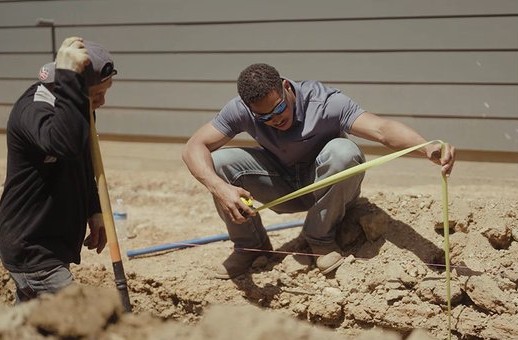
On the jobsite. Pour oversight, footings, framing walkthroughs. Filmed, not staged for a course.
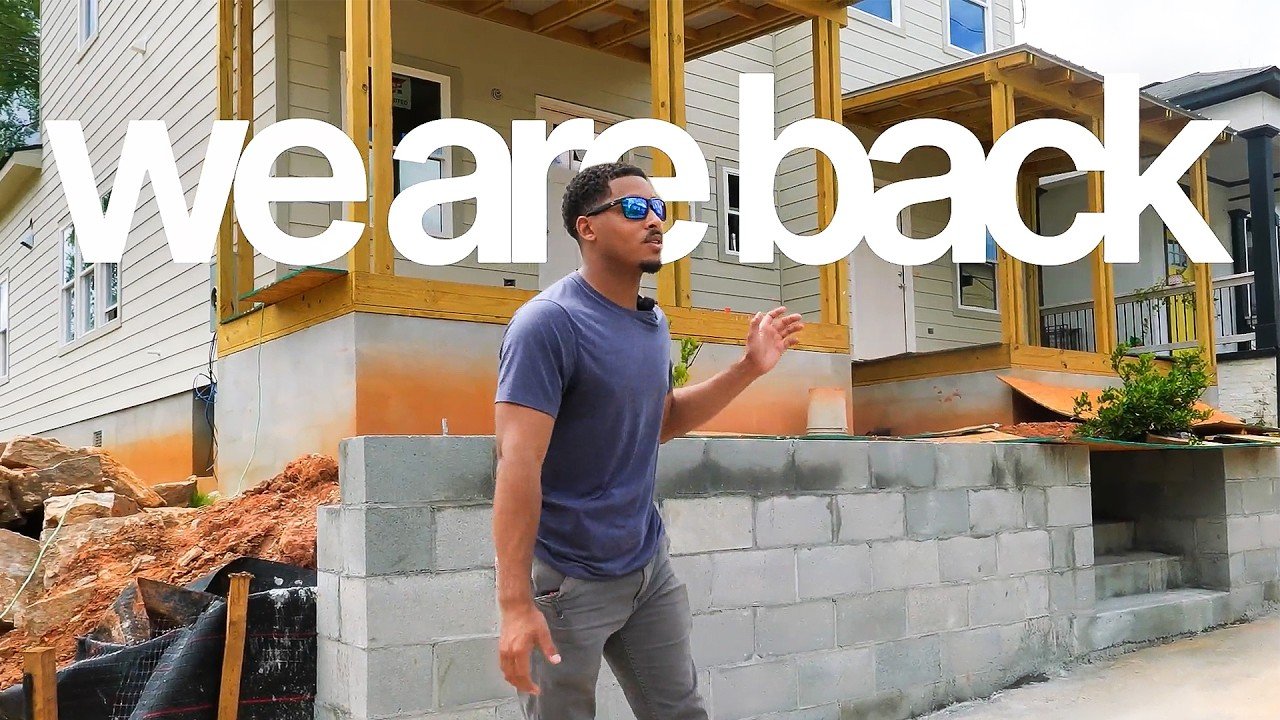
I'm Building 3 Duplexes at Once in Atlanta (Here's What's Happening). Plus three urban infill specs in Northwest Atlanta, crawl space and stem wall details, and final grading.
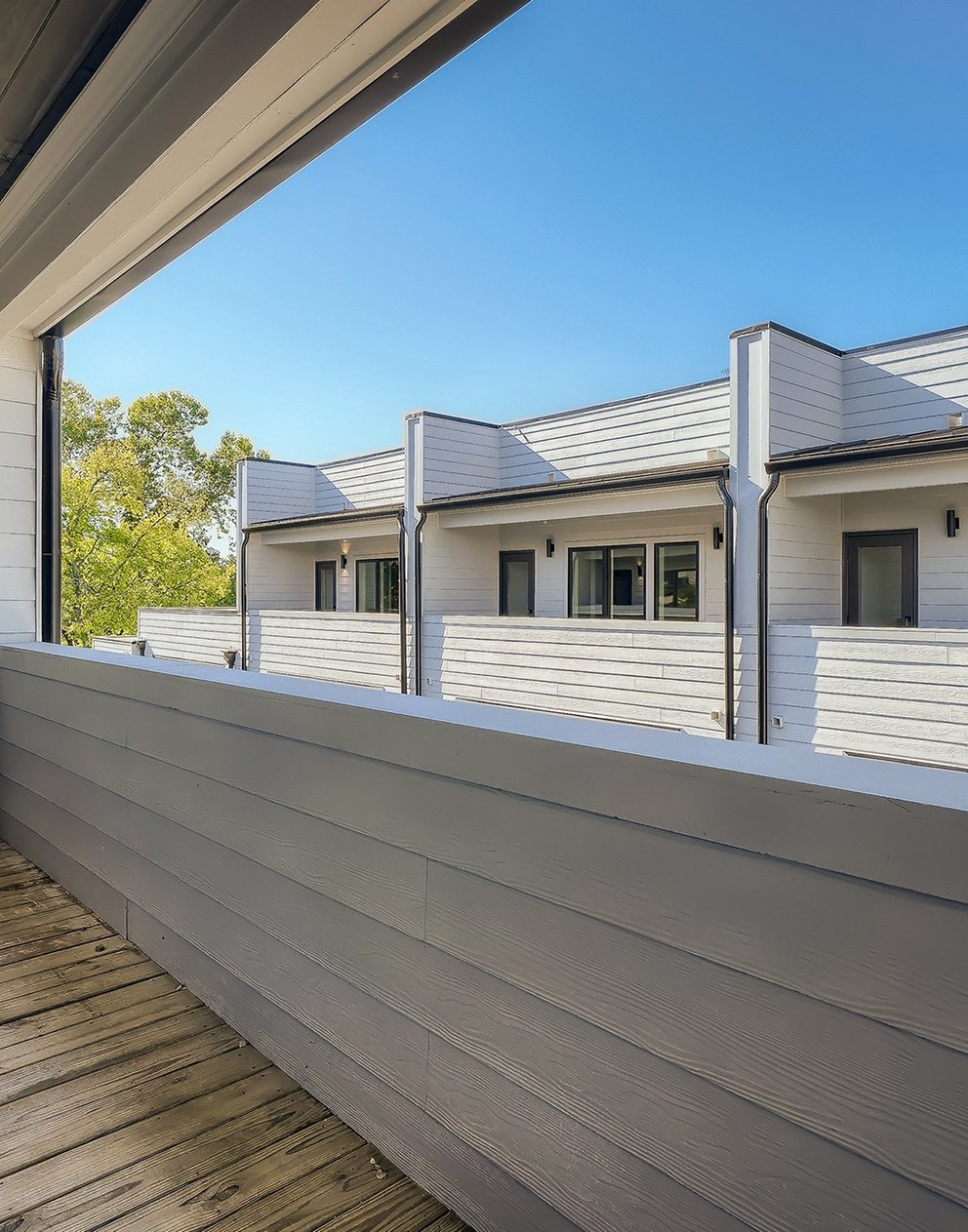
Finished product. Project photo from our New Build Orientation site.
Before you make an offer
This is the Deal Viability Worksheet from my program. Four cost buckets, every line filled in with a real number. Leave a blank and you are underestimating.
Bucket 1 · Land
20 to 30%
Of total project cost, on the worksheet's planning range.
Bucket 2 · Soft costs
15 to 20%
Paid before the construction loan funds.
The rule
No blanks
A blank line is an underestimate. Get the permit quote from the city.
LandBucket 1
Soft costsBucket 2
Hard costsBucket 3
ContingencyBucket 4
This is where first builds go wrong. Most people budget the house. The worksheet makes you budget the project. In coaching you fill it in on your actual lot, and I go through it with you line by line.
Who I am
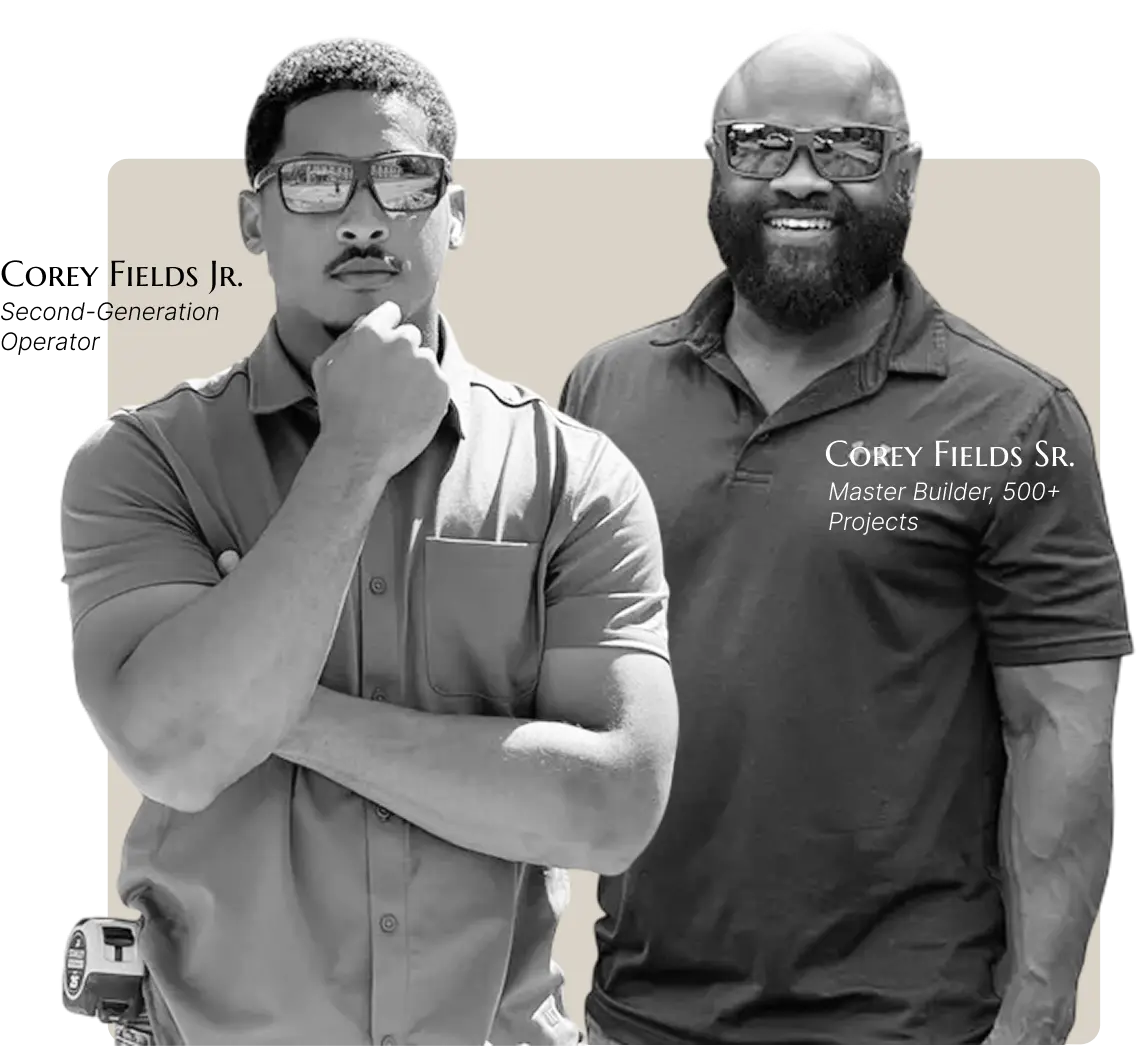
I'm Corey Fields Jr., a second-generation builder, investor, and developer. My father, Corey Fields Sr., and I created the New Build Orientation program and the Before You Build guide together.
On YouTube, I document new construction in Atlanta as it happens. I break down the business model for investors who want to add ground-up to what they already do.
When you join, you work with me directly. My dad is co-creator of the frameworks we will work from.
“Second-generation operator breaking down the new construction business model. Deals, decisions, and what actually matters.”
From my YouTube channel · @CoreyFieldsII
What you get
Eight months, run by me, for investors putting their own capital into new construction.
Included[PROGRAM_DURATION]
What I promise is the process. I work your pre-construction checklist with you until it is decision-ready. I show up for every scheduled call. I reply within [MESSAGING_SLA]. I cannot promise what a build will return, and I will never pretend otherwise.
Applications for this round close [COHORT_DEADLINE].
Apply and book a callBy application, because I want to give every seat real attention.
Figuring it out alone
Working with me
This is for you if
This is not for you if
Other ways in
Same world. Different seat. The guide is a quick orientation read. The Orientation Program is self-paced curriculum. Coaching is me on your deal.
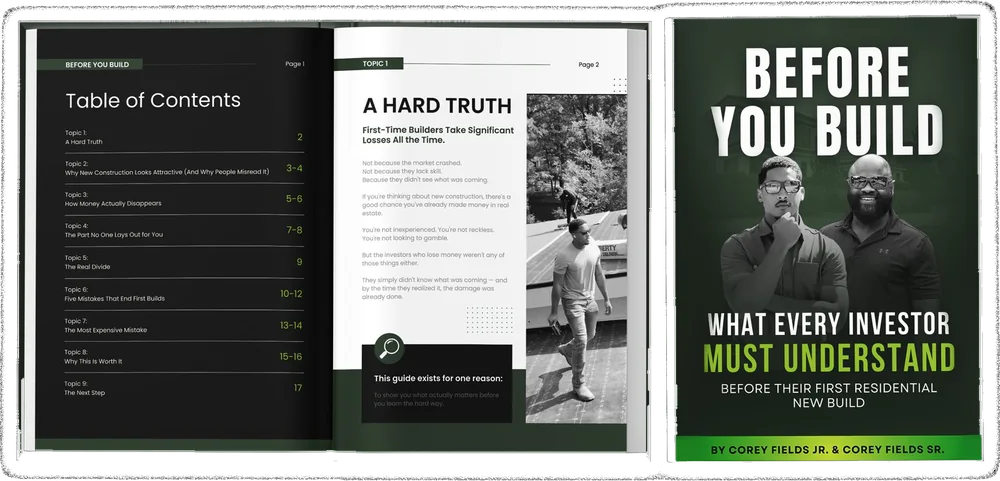
Guide$27
A 15-page pre-construction guide with bonuses and Skool community access for buyers.
See the guide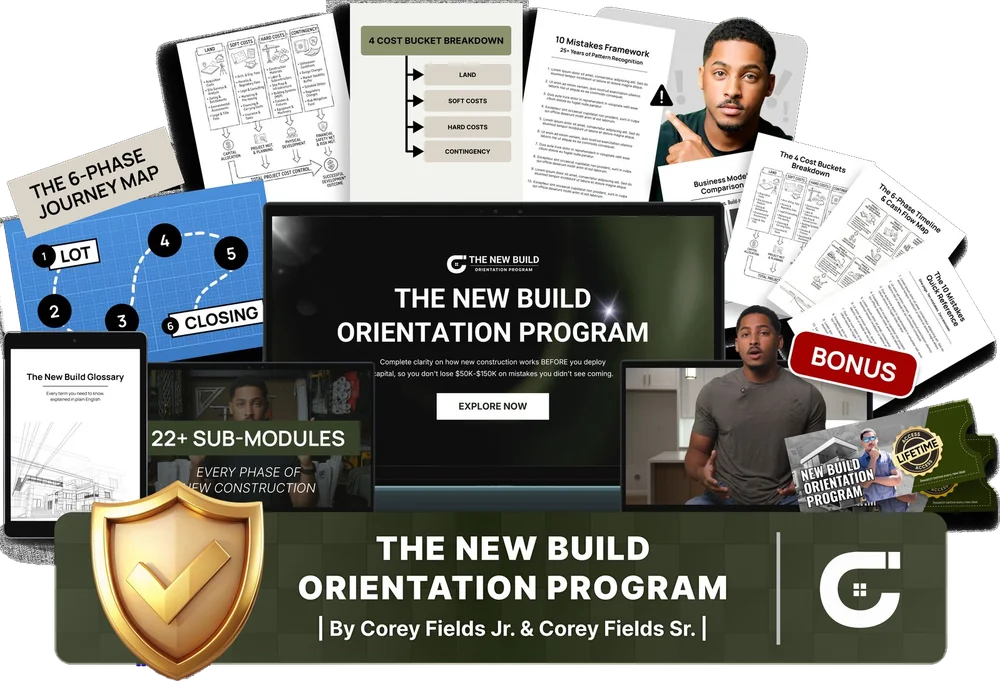
Self-paced$997
22+ sub-modules and frameworks. Enrolled members join the private Skool community.
See the program
YouTubeFree
Builds documented in public. Deals, decisions, and what actually matters.
Watch the channelFAQ
The guide is a 15-page read on what every investor should understand before a first residential new build. It is a strong first step. Coaching is me working your actual lot, budget, and GC decisions with you.
The Orientation Program is self-paced. You work through the modules on your own time. Coaching is direct. Same frameworks, different seat. You get my read on your deal, not just the curriculum.
No. You will not learn takeoffs, sub management, or how to swing a hammer. This is the investor seat. What to buy, who to hire, what it really costs, and when to walk.
No. You own the deal, the capital, and the decisions. You hire your own GC. I advise.
No. New construction can lose money, and anyone promising margins is selling something. What I promise is process. I work your pre-construction checklist with you until it is decision-ready, and I show up.
I build in Atlanta. If your market is somewhere else, tell me on your application. We decide on fit before anyone commits to anything.
I go over pricing on the call, once I know your deal and we both know it is a fit. Nothing gets committed before that.
Apply
Short application, then book your call. Tell me about your deal and we will go from there.